General
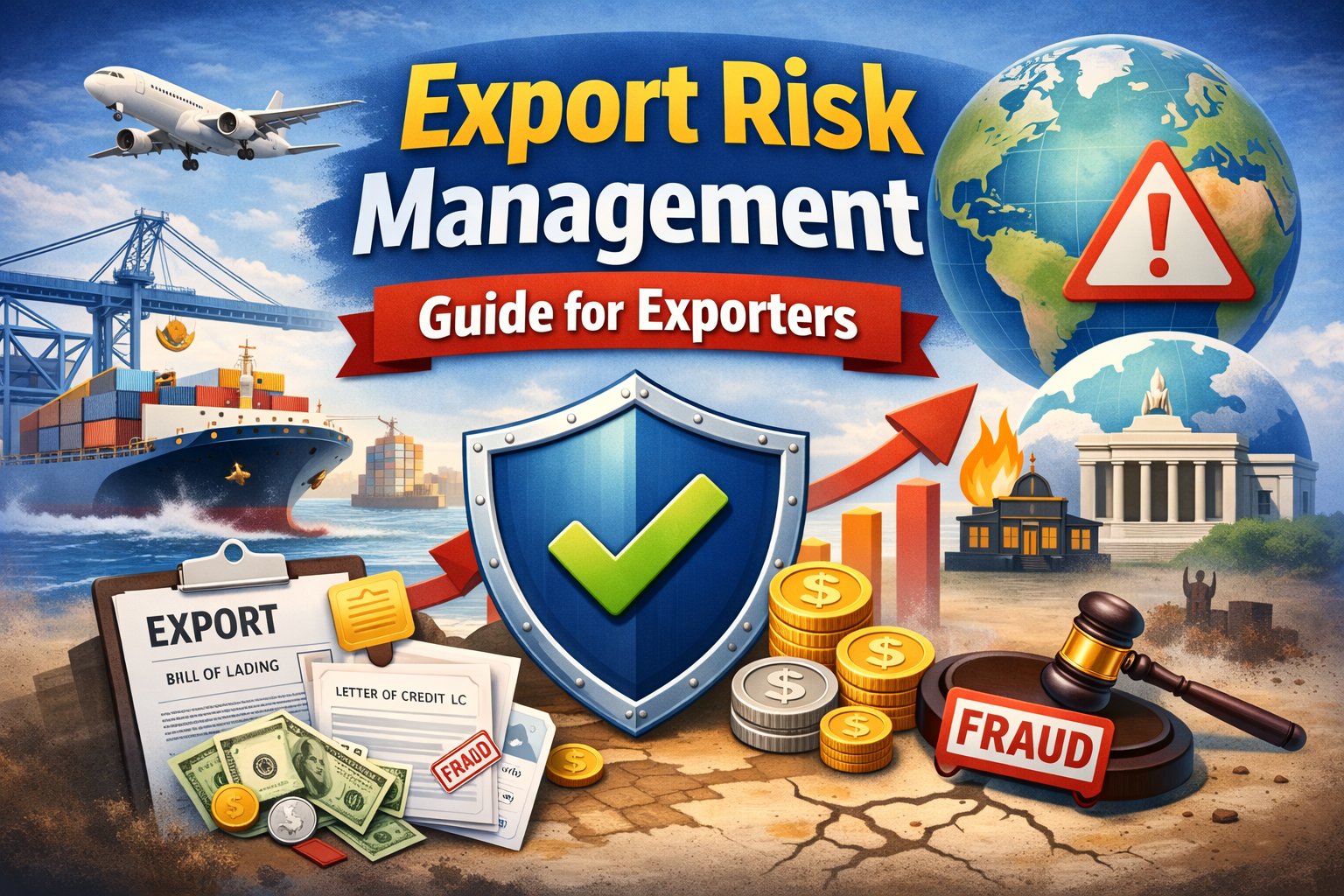
Export Risk Management Guide for Exporters
This is a 100% practical training program designed to help you become job-ready, business-ready, and globally competitive.
Admin
March 31, 2026
Exporting products to international markets is exciting. It opens doors to bigger profits, global buyers, and long-term business growth. But international trade also comes with challenges.
Many exporters focus only on finding buyers and shipping products. They often ignore one very important factor—risk management.
A single mistake in payment terms, documentation, logistics, or buyer selection can lead to heavy losses. Delayed payments, shipment damage, fraud, currency fluctuations, and political instability are common risks in export business.
This is why successful exporters always focus on export risk management.
The good news is that most export risks can be controlled if you understand them in advance and take the right precautions.
In this complete guide, you will learn:
- What export risk management means
- Common export business risks
- How exporters protect themselves from losses
- International trade risk management strategies
- Why practical export training is important
If you want to build a safe and profitable export business, this guide will help you understand how to reduce risks and operate with confidence.
Whenever you export goods to another country, many things can go wrong:
- Buyer may delay payment
- Goods may get damaged during shipping
- Customs clearance may fail
- Currency value may change
- Political issues may impact trade
Export risk management helps businesses prepare for these situations before they become major problems.
In simple words, it is the process of protecting your export business from financial loss, legal issues, delays, and fraud.
Here are some major reasons why export risk management is important:
Sometimes buyers delay payment, refuse to pay, or disappear after receiving goods.
- Late payments
- Fraudulent buyers
- Currency transfer issues
- Use Letter of Credit (LC)
- Work with trusted buyers
- Verify buyer background before accepting orders
Some buyers may place large orders and later refuse to pay. Others may negotiate aggressively and create unnecessary disputes.
- Check buyer website and reviews
- Ask for trade references
- Use video calls before finalizing deals
- Start with small orders
Even one small error can create problems at customs or delay shipments.
- Packing List
- Bill of Lading
- Certificate of Origin
- Shipping Bill
- Match invoice and packing list details
- Ensure correct HS code usage
- Work with experienced CHA or freight forwarders
- Delayed shipment
- Wrong routing
- Container shortage
- Port congestion
- Use proper export packaging
- Buy cargo insurance
- Track shipments regularly
For example, if you quote a price in USD and the currency value changes before payment, your profit may reduce.
- Quote prices carefully
- Request faster payments
- Monitor currency trends
- New customs rules
- Political conflicts
- Economic crises
- Diversify export markets
- Stay updated on international news
- Work with export advisors
If you fail to follow product standards, labeling requirements, or legal documentation, your shipment can be rejected.
- Follow packaging and labeling standards
- Check product certifications required
- Stay updated with export regulations
If one buyer stops ordering, your business should still survive.
- Advance Payment
- Letter of Credit (LC)
- Documents Against Payment
Avoid giving long credit periods to new buyers.
This is especially useful for high-value shipments.
- Buyer communication
- Contracts
- Shipping documents
- Payment receipts
This helps during disputes or legal issues.
Strong partners reduce operational risk.
For small businesses, even one failed shipment can create financial pressure.
That is why small exporters should:
- Avoid large risky orders in the beginning
- Start with small shipments
- Work only with verified buyers
- Use safe payment methods
- Focus on documentation accuracy
Practical knowledge is extremely important for small exporters.
This makes Ahmedabad an excellent place to learn export-import.
If you are based in Ahmedabad, learning export-import can help you unlock both career growth and business opportunities.
You need to understand:
- Real export documentation
- Buyer finding techniques
- Payment methods
- Shipping process
- Risk management strategies
This is why practical training matters.
A good export-import course should teach:
- Live documentation
- Real case studies
- Buyer communication
- Export risk management
- Business setup guidance
But real exporters need practical knowledge.
GIFT Export Import Training is designed to help students, job seekers, and entrepreneurs understand export business in a real and practical way.
- Export documentation
- Payment security
- Logistics and shipping
- Risk management
- Export business setup
The training is focused on practical learning so that you are ready to work or start your own business.
Successful exporters are not the ones who avoid risk completely—they are the ones who understand risk and manage it wisely.
If you want to build a successful export business, you must learn:
- Payment protection
- Buyer verification
- Documentation accuracy
- Shipping management
- International trade risk management
The more practical knowledge you have, the safer and stronger your export business becomes.
Learn:
- Real export documentation
- Buyer finding techniques
- Safe payment methods
- Export risk management
- International business setup
This is a 100% practical training program designed to help you become job-ready, business-ready, and globally competitive.
👉 Join GIFT Export Import Training today and build your future in international trade.
Many exporters focus only on finding buyers and shipping products. They often ignore one very important factor—risk management.
A single mistake in payment terms, documentation, logistics, or buyer selection can lead to heavy losses. Delayed payments, shipment damage, fraud, currency fluctuations, and political instability are common risks in export business.
This is why successful exporters always focus on export risk management.
The good news is that most export risks can be controlled if you understand them in advance and take the right precautions.
In this complete guide, you will learn:
- What export risk management means
- Common export business risks
- How exporters protect themselves from losses
- International trade risk management strategies
- Why practical export training is important
If you want to build a safe and profitable export business, this guide will help you understand how to reduce risks and operate with confidence.
What is Export Risk Management?
Export risk management means identifying, analyzing, and reducing the risks involved in international trade.Whenever you export goods to another country, many things can go wrong:
- Buyer may delay payment
- Goods may get damaged during shipping
- Customs clearance may fail
- Currency value may change
- Political issues may impact trade
Export risk management helps businesses prepare for these situations before they become major problems.
In simple words, it is the process of protecting your export business from financial loss, legal issues, delays, and fraud.
Why Export Risk Management is Important
Many exporters lose money not because they have a bad product, but because they fail to manage risk properly.Here are some major reasons why export risk management is important:
Protects Against Payment Delays
International buyers may ask for long credit periods or delay payments. Without proper payment security, exporters can face cash flow problems.Reduces Financial Loss
Damage to cargo, shipment delays, and incorrect documentation can cause major losses.Improves Business Stability
A risk management strategy helps exporters handle unexpected problems without affecting long-term business growth.Builds Confidence
When exporters know how to manage risks, they can expand into new markets more confidently.Increases Buyer Trust
Professional exporters who understand documentation, payment methods, and logistics appear more reliable to international buyers.Common Export Business Risks
Every exporter should understand the major risks involved in international trade.1. Payment Risk
Payment risk is one of the biggest risks in export business.Sometimes buyers delay payment, refuse to pay, or disappear after receiving goods.
Common Payment Risks:
- Buyer default- Late payments
- Fraudulent buyers
- Currency transfer issues
How to Reduce Payment Risk:
- Ask for advance payment- Use Letter of Credit (LC)
- Work with trusted buyers
- Verify buyer background before accepting orders
2. Buyer Risk
Not every international buyer is genuine.Some buyers may place large orders and later refuse to pay. Others may negotiate aggressively and create unnecessary disputes.
How to Reduce Buyer Risk:
- Verify buyer company profile- Check buyer website and reviews
- Ask for trade references
- Use video calls before finalizing deals
- Start with small orders
3. Documentation Risk
Export business depends heavily on accurate documentation.Even one small error can create problems at customs or delay shipments.
Important Export Documents:
- Commercial Invoice- Packing List
- Bill of Lading
- Certificate of Origin
- Shipping Bill
How to Reduce Documentation Risk:
- Double-check all documents- Match invoice and packing list details
- Ensure correct HS code usage
- Work with experienced CHA or freight forwarders
4. Logistics and Shipping Risk
International shipping is complex. Goods may get delayed, damaged, or lost during transit.Common Shipping Risks:
- Cargo damage- Delayed shipment
- Wrong routing
- Container shortage
- Port congestion
How to Reduce Shipping Risk:
- Choose reliable freight forwarders- Use proper export packaging
- Buy cargo insurance
- Track shipments regularly
5. Currency Exchange Risk
Exchange rates can change suddenly.For example, if you quote a price in USD and the currency value changes before payment, your profit may reduce.
How to Reduce Currency Risk:
- Use forward contracts- Quote prices carefully
- Request faster payments
- Monitor currency trends
6. Political and Country Risk
Political instability, war, government restrictions, or trade sanctions can impact exports.Examples:
- Sudden import bans- New customs rules
- Political conflicts
- Economic crises
How to Reduce Political Risk:
- Avoid depending on one country- Diversify export markets
- Stay updated on international news
- Work with export advisors
7. Legal and Compliance Risk
Different countries have different import regulations.If you fail to follow product standards, labeling requirements, or legal documentation, your shipment can be rejected.
How to Reduce Legal Risk:
- Understand destination country rules- Follow packaging and labeling standards
- Check product certifications required
- Stay updated with export regulations
International Trade Risk Management Strategies
Successful exporters do not eliminate risk completely—they manage it wisely.Diversify Your Buyer Base
Do not depend on only one buyer or one country.If one buyer stops ordering, your business should still survive.
Use Safe Payment Terms
The safest payment methods in export business include:- Advance Payment
- Letter of Credit (LC)
- Documents Against Payment
Avoid giving long credit periods to new buyers.
Purchase Export Insurance
Export insurance protects exporters from buyer default, political risks, and cargo damage.This is especially useful for high-value shipments.
Keep Strong Documentation
Maintain proper records of:- Buyer communication
- Contracts
- Shipping documents
- Payment receipts
This helps during disputes or legal issues.
Work with Reliable Partners
Choose experienced freight forwarders, customs agents, transport companies, and inspection agencies.Strong partners reduce operational risk.
Export Risk Management in Small Businesses
Small exporters are more vulnerable because they often have limited capital.For small businesses, even one failed shipment can create financial pressure.
That is why small exporters should:
- Avoid large risky orders in the beginning
- Start with small shipments
- Work only with verified buyers
- Use safe payment methods
- Focus on documentation accuracy
Practical knowledge is extremely important for small exporters.
Export Import Course in Ahmedabad
Ahmedabad is one of India’s fastest-growing business cities. It has strong industries in textiles, chemicals, engineering, handicrafts, and manufacturing.This makes Ahmedabad an excellent place to learn export-import.
Why Ahmedabad Students and Entrepreneurs Should Learn Export Import
1. Strong Business Environment
Ahmedabad has thousands of manufacturers and traders who want to export globally.2. High Demand for Export Professionals
Companies need trained people who understand export documentation, logistics, and buyer communication.3. Business Growth Opportunities
Entrepreneurs in Ahmedabad can easily expand their products into international markets.4. Better Income Potential
Export business offers higher margins and global exposure compared to local business alone.5. Practical Learning Advantage
Students who learn export-import practically can get jobs faster or start their own business sooner.If you are based in Ahmedabad, learning export-import can help you unlock both career growth and business opportunities.
Why Practical Export Training is Important
Reading blogs and watching videos can give basic information, but export business is practical.You need to understand:
- Real export documentation
- Buyer finding techniques
- Payment methods
- Shipping process
- Risk management strategies
This is why practical training matters.
A good export-import course should teach:
- Live documentation
- Real case studies
- Buyer communication
- Export risk management
- Business setup guidance
Why GIFT Export Import Training is Different
Most courses only teach theory.But real exporters need practical knowledge.
GIFT Export Import Training is designed to help students, job seekers, and entrepreneurs understand export business in a real and practical way.
What You Learn:
- Buyer finding methods- Export documentation
- Payment security
- Logistics and shipping
- Risk management
- Export business setup
The training is focused on practical learning so that you are ready to work or start your own business.
Frequently Asked Questions (FAQs)
1. What is export risk management?
Export risk management is the process of identifying and reducing risks involved in international trade such as payment delays, shipping damage, fraud, and legal issues.2. What are the biggest export business risks?
Some of the biggest risks include payment default, buyer fraud, documentation errors, logistics delays, and currency fluctuations.3. How can exporters reduce payment risk?
Exporters can reduce payment risk by using advance payment, Letter of Credit, buyer verification, and export insurance.4. Why is export documentation important?
Proper documentation helps avoid customs delays, shipment rejection, and legal problems during export.5. Is export-import a good career option?
Yes, export-import offers excellent career opportunities, global exposure, and business growth potential.Conclusion
Export business can be highly profitable, but it also comes with risks.Successful exporters are not the ones who avoid risk completely—they are the ones who understand risk and manage it wisely.
If you want to build a successful export business, you must learn:
- Payment protection
- Buyer verification
- Documentation accuracy
- Shipping management
- International trade risk management
The more practical knowledge you have, the safer and stronger your export business becomes.
Call To Action
If you want to learn export-import practically and understand how to manage risks in real business situations, join the GIFT Export Import Course in Ahmedabad.Learn:
- Real export documentation
- Buyer finding techniques
- Safe payment methods
- Export risk management
- International business setup
This is a 100% practical training program designed to help you become job-ready, business-ready, and globally competitive.
👉 Join GIFT Export Import Training today and build your future in international trade.